A journalist on deadline will not fill in your form
We published four years of banking research and made it as easy to take as we could, rather than locking it up. Five leads came back in the first three days, and all five were exactly who we wanted.
Perigon publishes an ESG Banking Barometer every year. The 2026 edition is the fourth: public disclosures from 60 banks, building societies and fintechs, covering more than 90% of UK and Irish retail and commercial banking assets. Emma, our CEO, does the analysis. She is the reason anyone should believe the numbers.
My job started where hers finished. We had four years of research and a Word document. What do you actually do with that?
The obvious answer is to treat it as an asset and make people pay for it in attention. Put the report behind a form. Put the data behind a form. Put the press release behind a form. Every download becomes a lead, and a consultancy that sells strategy advice ends up with a list of people who are demonstrably interested in banking strategy.
We chose to do the opposite.
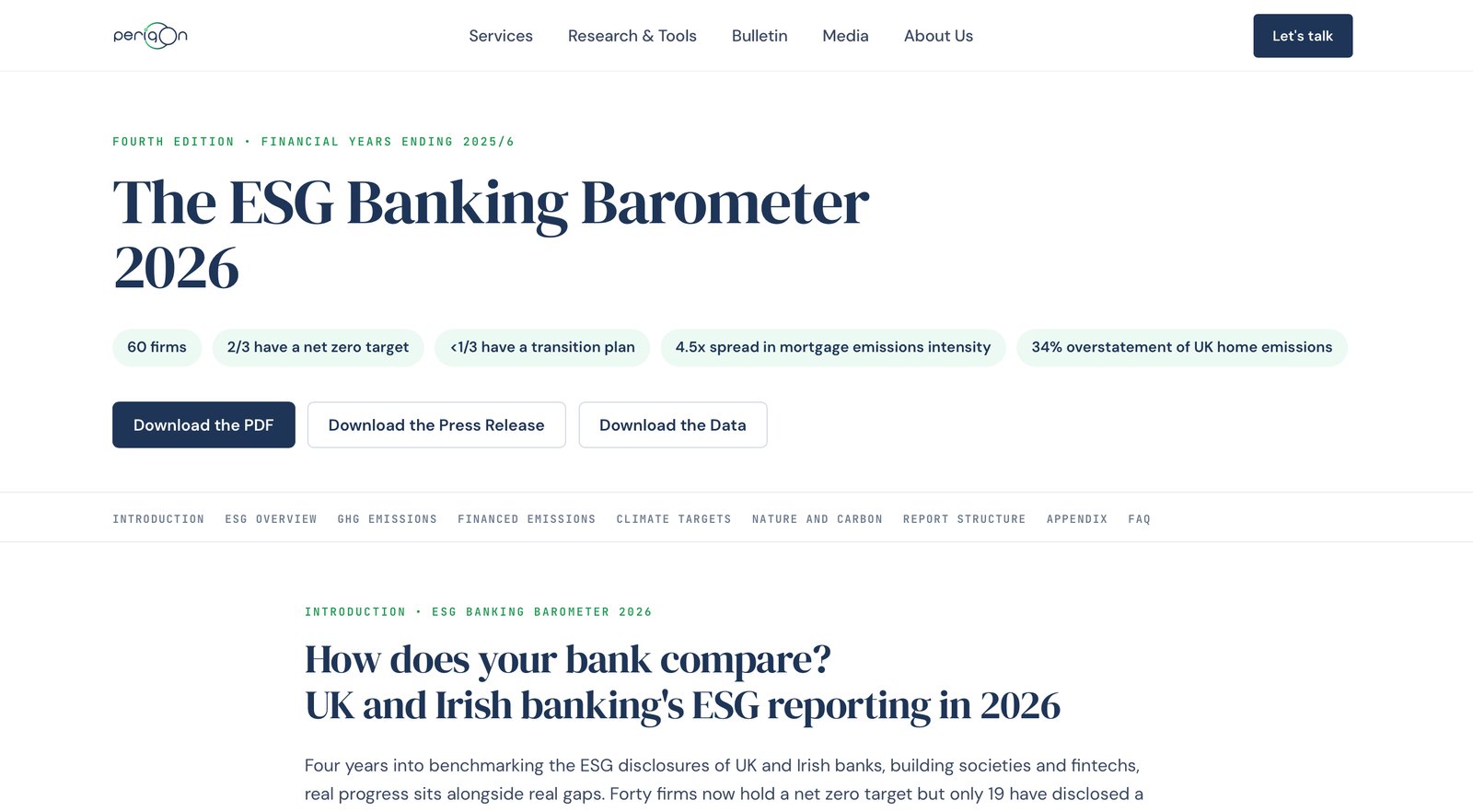
Why I didn’t gate the press release
A journalist on deadline will not fill in your form. They will find the same story somewhere else, or they will not run it.
The entire point of a press release is pickup. Putting a gate in front of it means trading the thing the artefact exists for against a handful of email addresses, most of which will belong to people who were never going to hire us anyway. So the release went out ungated, and stayed ungated.
Once you accept that for the release, the question changes for everything else. Not “how much can I capture” but “how little friction can I get away with”.
The press release is a page, and it is meant to rank
The default is to write the release, export it as a PDF, and put a download button on it. I didn’t want that. A PDF collects no links, ranks badly, and cannot be read properly on a phone. So the release is an HTML page with its own URL, structured as a news article so search engines can see what it is, and the main call to action points at the page rather than at a file.
That means shares and inbound links accrue to something we own and can update, rather than to a file sitting in somebody’s downloads folder.
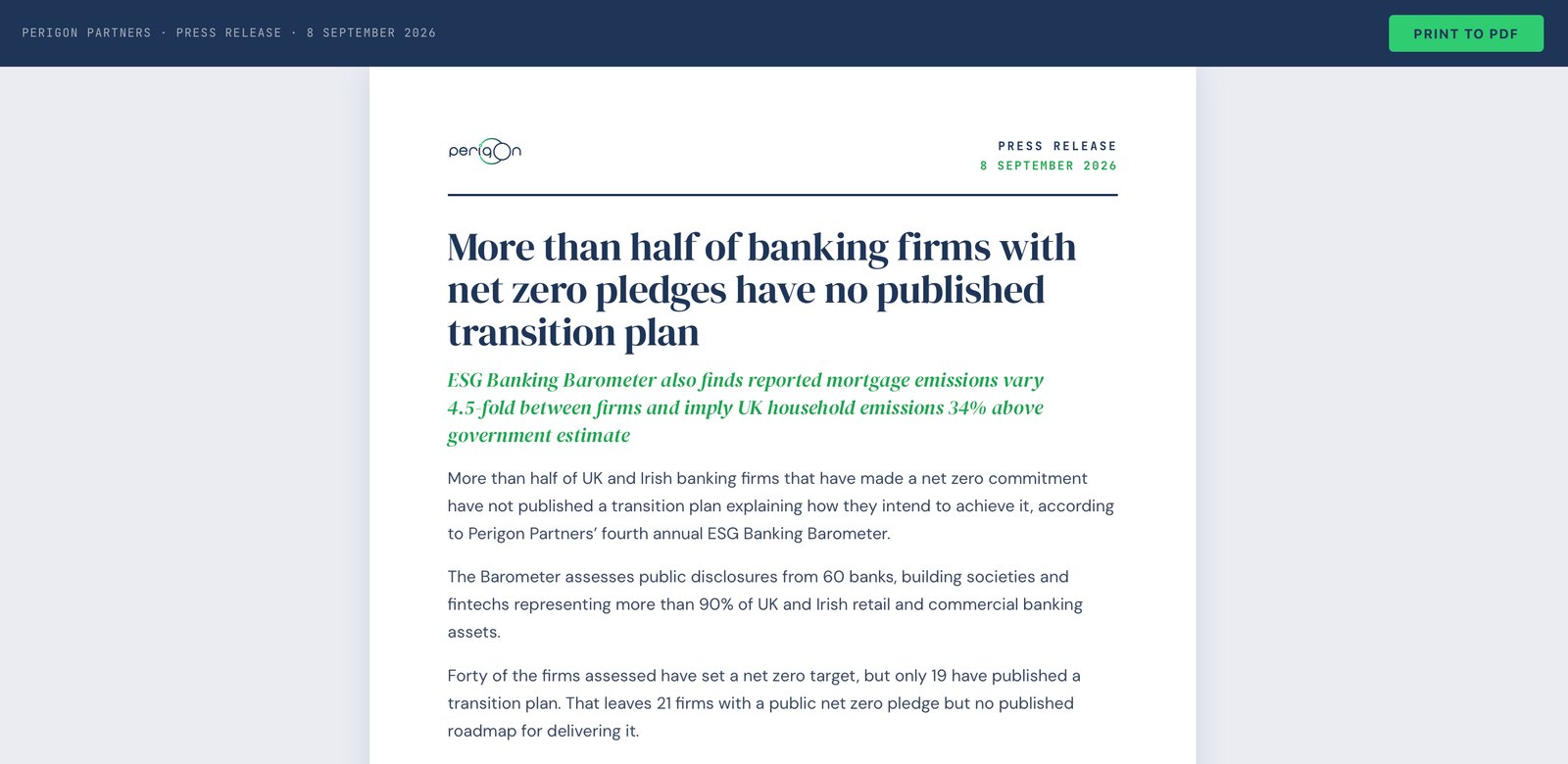
The Print to PDF button in the bar is the compromise. If a journalist does want a file, they can make their own, and we have one artefact to keep in step rather than two.
A soft ask, not a gate
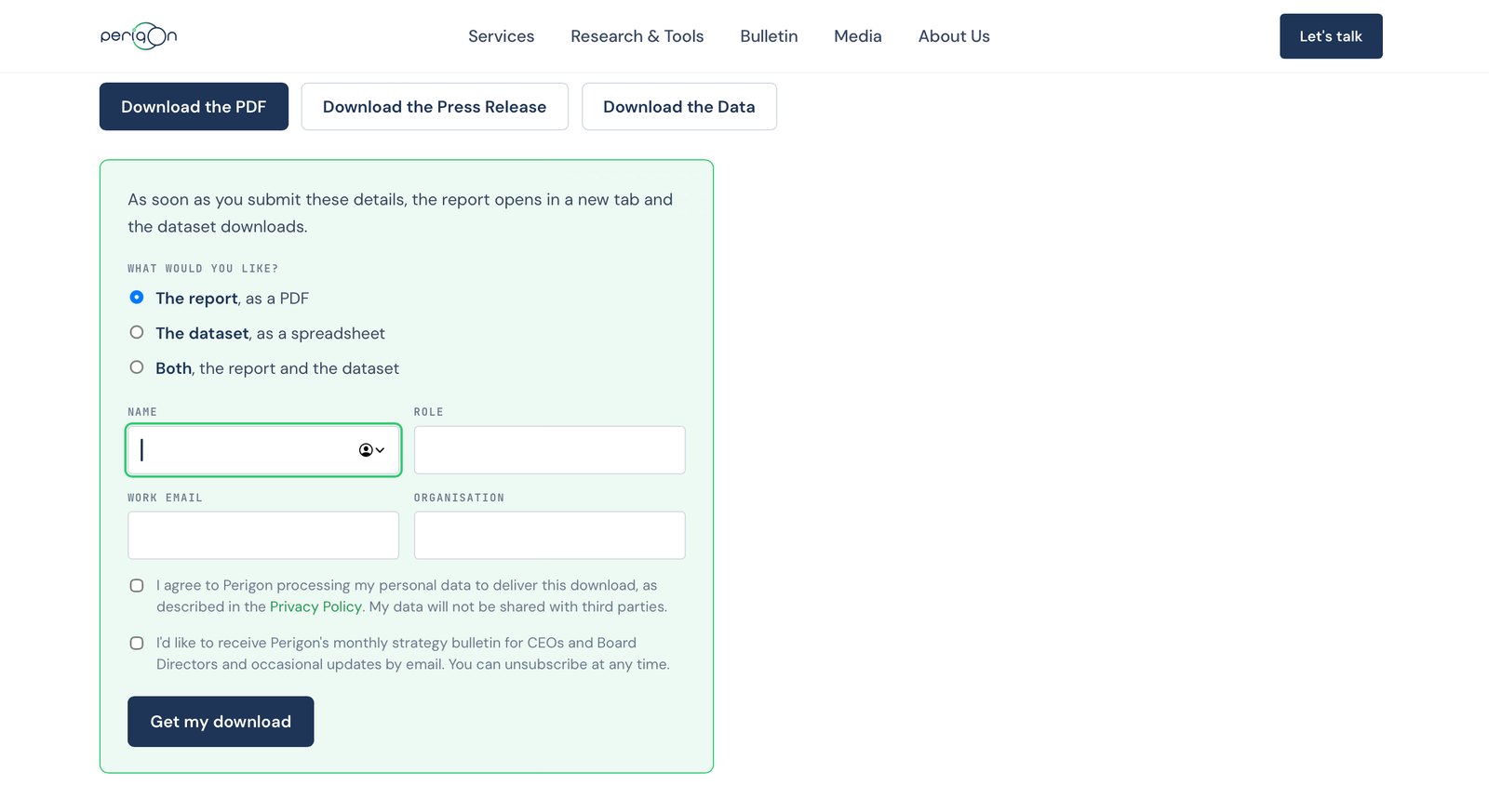
The report and the dataset do sit behind a form, and I was specific with myself about what that form is:
gating the PDF and the data download is not “gating” really. It’s a soft ask to join our lead database and gain access. I don’t want to overthink it.
Which produced a set of small decisions that all point the same way. One form, not two, because wanting both the report and the data should be a radio button rather than a reason to fill the same thing in twice. No link expiry, because we are not selling this and an expired link is a small insult to someone who bookmarked it. One webhook for every download, told apart by a field, so the lead sheet is written in one place and there is one thing to change when consent rules change.
Then the ads
The press release template and the landing page are the part that scales. Both are reusable for the next edition and for every other Perigon release, which is why I built them as templates rather than as one-offs.
On top of that, a LinkedIn campaign with its own audience and creative, targeted narrowly. I simply added the whole Banking Barometer PDF and gated it after five pages, hoping the overarching headlines and a glimpse into the structure of the report would entice our target audience. I also made use of the LinkedIn ad strategy consultants and had a free consultation with them to hone the audience and improve the ad.
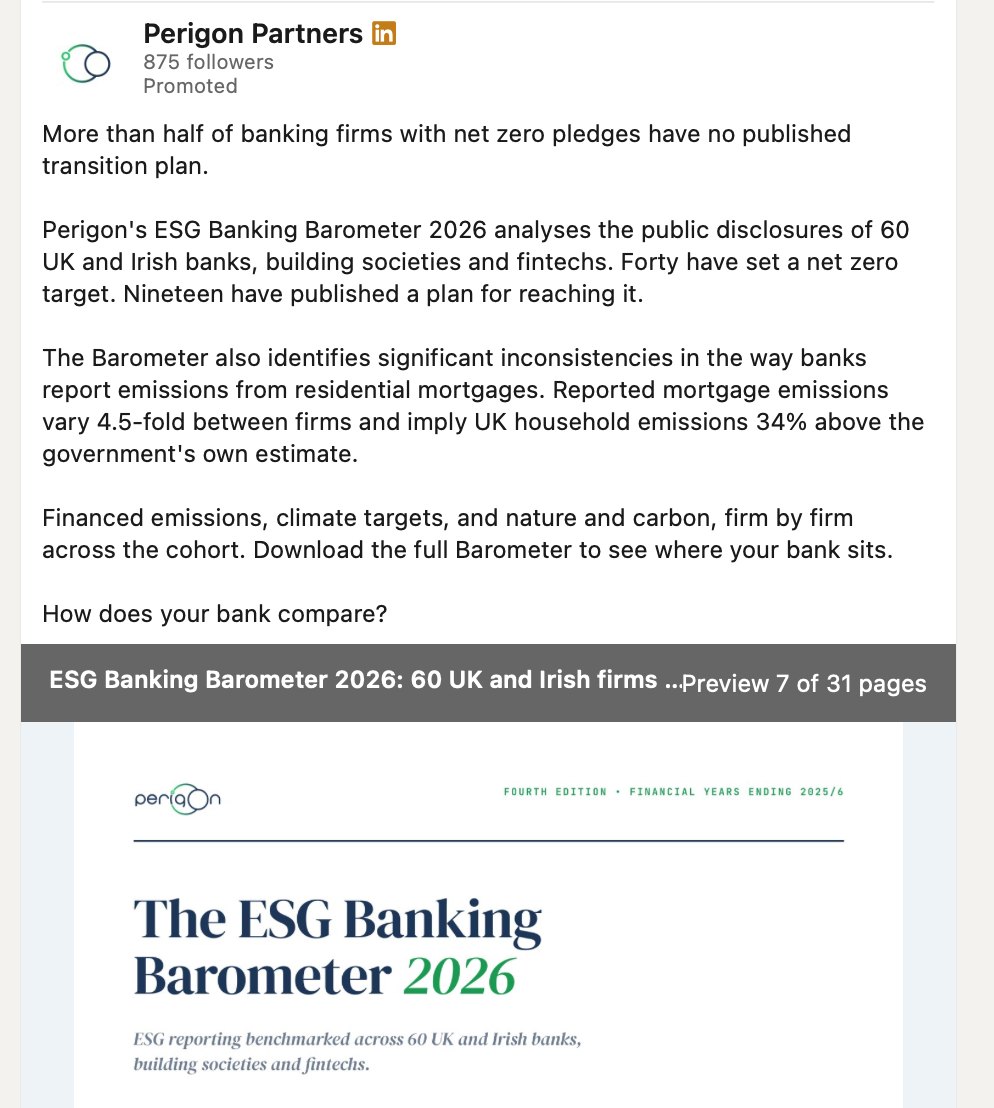
Five leads, and why that is a good number
Three days in, five leads through the download gate, all of them in our (admittedly niche) target audience in the UK finance sector.
Five will not sound like much if you are used to course launches or retail. I have run those, and five would have been a bad morning. For a strategy consultancy building an inbound pipeline, where one engagement is worth a great deal and the buyer is a named person in a boardroom, five of exactly the right people in three days is a good start.
It is a start, though, and that is all it is. The launch is barely a fortnight old. I do not yet know what the press pickup looks like, what the campaign costs per lead once it has run properly, or how many of those five turn into a conversation. I’ll come back to this when there is a month of data rather than three days of it.
What I am confident about is the shape. We made the research as easy to take as we could, and put a soft ask in front of only the two artefacts where a soft ask is reasonable. The leads that came back were not people grabbing a free PDF. They were the people it was written for.